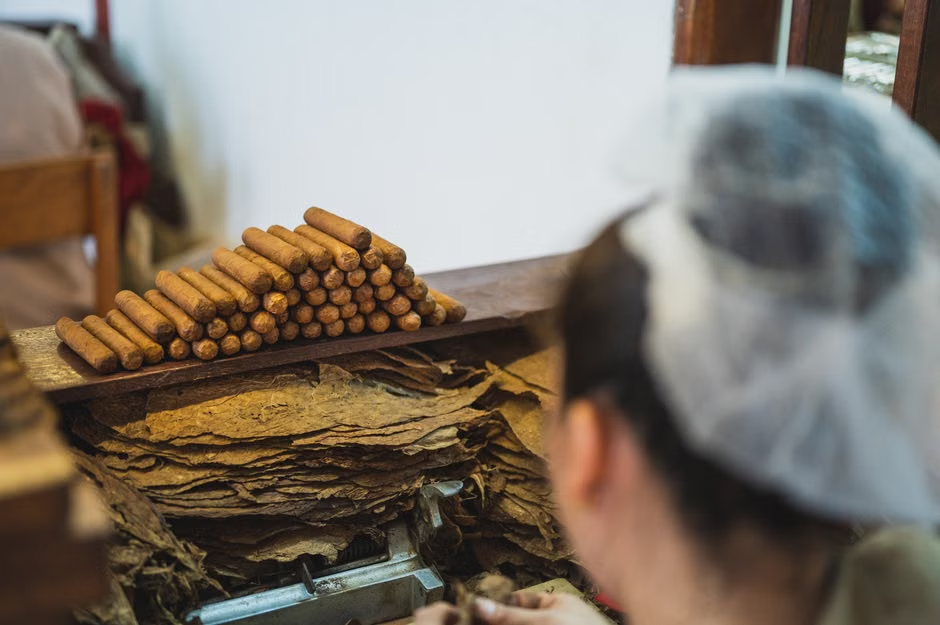
 Photo by Thibault Luycx
THE LOCAL OUTPOST | THE HUMIDOR
The cigars Americans smoke today are direct descendants of a geopolitical rupture that began more than six decades ago. Walk into any humidor in the United States and you will find Nicaraguan Padrons, Dominican Fuentes, and Honduran blends, but you will not find a single legal Cuban cigar. That absence is not an accident of taste or supply. It is the result of one of the longest-running trade embargoes in modern history, a policy that reshaped the global premium cigar market and created an enduring mystique around the forbidden island’s tobacco. By the end of this article, you will understand exactly why Cuban cigars are illegal in the US, how the embargo shaped today’s premium cigar market, and whether your favorite Nicaraguan smokes could face a similar fate.
The Origins of the Cuban Embargo: A Cold War Flashpoint
The 1960 Sanctions and the Castro Revolution
The embargo’s roots trace to January 1959, when Fidel Castro’s revolutionary forces overthrew the US-backed Batista regime in Havana. Within months, Castro began seizing American-owned businesses across the island, including sugar plantations, banks, and cigar factories. For decades, American companies had controlled much of Cuba’s cigar industry, and the nationalization of those assets struck directly at US economic interests. In October 1960, President Dwight D. Eisenhower imposed a partial trade embargo on Cuba in response to Castro’s expropriation of US properties. This was the first direct blow to Cuban cigar exports, cutting off a product that had been a staple of American luxury consumption for over a century.

The full economic embargo was formalized in February 1962 under President John F. Kennedy, expanding restrictions to nearly all trade between the two nations. Before the embargo, Cuba was the undisputed center of the premium cigar world, with brands like Cohiba, Montecristo, and Partagás dominating the global market. The embargo was not just a political maneuver. It was a direct assault on Cuba’s most famous luxury export, permanently altering the global cigar supply chain and forcing American smokers to look elsewhere.
The Helms-Burton Act and the Embargo’s Legal Framework
The 1996 Helms-Burton Act codified the embargo into law, making it nearly impossible for a president to lift it unilaterally without congressional action. The law also allowed US citizens to sue foreign companies trafficking in property confiscated from Americans after the revolution. That provision continues to deter international cigar manufacturers from Cuban operations, even decades later. The embargo’s legal architecture has survived multiple presidential administrations, with only narrow exceptions carved out for agricultural and medical exports. For cigar enthusiasts, the practical effect is absolute: Cuban cigars cannot be legally imported, sold, or purchased on US soil, regardless of the political climate.
JFK’s Last-Minute Cigar Run: The Human Side of History
The Day Before the Embargo Was Signed
On February 6, 1962, the day before Kennedy signed the embargo proclamation, he instructed his press secretary, Pierre Salinger, to secure a specific purchase. The request was simple and urgent: get me a thousand Petit Upmanns before the signing took effect. Salinger famously secured roughly 1,200 Cuban cigars from a Washington, DC, retailer, delivering them to the Oval Office the night before the embargo went into effect. Kennedy reportedly never smoked a single one publicly. The cigars became a collector’s item, symbolizing the irony of a president banning a product he personally enjoyed. This anecdote humanizes the embargo, showing that even the architect of the policy understood the allure of Cuban tobacco.
Photo by Mark Stebnicki
What the JFK Story Reveals About Cuban Cigar Demand
The JFK anecdote underscores a persistent truth: the embargo created scarcity, and scarcity created mystique. Cuban cigars became the ultimate forbidden fruit for American smokers, driving black-market demand that persists to this day. The story also highlights the cultural weight of Cuban tobacco. Even a president facing a geopolitical crisis paused to stockpile his favorite smokes.
How the Embargo Reshaped the Global Cigar Market
The Rise of the Dominican Republic and Nicaragua
With Cuban supply cut off, American cigar manufacturers scrambled for alternatives. They turned to the Dominican Republic, Honduras, and Nicaragua for wrapper, binder, and filler tobacco. The Dominican Republic became the first major beneficiary, with brands like Arturo Fuente and Davidoff establishing operations in the 1960s and 1970s. Nicaragua emerged later, particularly after the Sandinista revolution disrupted production in the 1980s. But by the 1990s, Nicaraguan tobacco was rivaling and some argue surpassing Cuban quality. Today, Nicaragua produces some of the world’s most highly rated cigars, with brands like Padron, Oliva, and Plasencia earning cult followings among American smokers. The embargo effectively forced innovation. Without Cuban leaf, blenders developed new profiles, and the premium cigar market diversified in ways it never would have under Cuban dominance.
The “Cuban Seed” Phenomenon and Its Legacy
Many of the tobacco seeds used in Nicaragua and the Dominican Republic are descended from Cuban seeds smuggled out after the revolution. This botanical inheritance keeps the Cuban legacy alive in every non-Cuban cigar that carries the “Cuban seed” label. The narrative is a powerful marketing tool, allowing non-Cuban cigars to claim a spiritual connection to the forbidden island. However, terroir matters. Soil, climate, and curing methods differ dramatically, meaning Cuban-seed tobacco grown in Nicaragua tastes distinctly different from Cuban-grown leaf. The result is a market where American smokers can experience Cubanesque profiles without ever touching an actual Cuban cigar.
Could a Nicaraguan Embargo Happen? Assessing the Risk
Political Tensions Between the US and Nicaragua
Nicaragua’s current government, led by President Daniel Ortega, has grown increasingly authoritarian, drawing sanctions from the US State Department over human rights abuses and election fraud. In 2021, the US imposed targeted sanctions on Ortega’s family members and key allies, though these stop well short of a full trade embargo. The Biden administration maintained pressure on Nicaragua, and the current 2026 Trump administration has shown no signs of reversing course, but the country’s cigar industry has remained largely untouched by sanctions. Unlike Cuba in 1960, Nicaragua’s economy is deeply integrated with US markets. Cigar manufacturing alone employs tens of thousands of Nicaraguans, and major US brands like Padron, Oliva, and Drew Estate have massive operations there. A full embargo on Nicaraguan cigars would be economically devastating for both countries, making it an unlikely though not impossible scenario.
Why the Cigar Industry Is Watching Closely
The cigar industry’s supply chain is concentrated. Nicaragua and the Dominican Republic account for the vast majority of premium cigars sold in the US. If sanctions were to expand to include tobacco products, the impact on American cigar smokers would be immediate and severe. Prices would spike, and availability would plummet. Industry analysts point to the 2022 Russian invasion of Ukraine as a cautionary tale. Geopolitical events can escalate quickly, and trade policy can shift overnight. However, most experts agree that a Nicaraguan embargo is unlikely in the near term, given the deep economic interdependence and the lack of political will in Washington to disrupt a beloved American pastime. The more realistic risk is targeted sanctions on specific Nicaraguan officials or companies, which could create supply chain friction without a full embargo.
The Modern Cuban Cigar Landscape: Legal Loopholes and Gray Markets
What US Travelers Can and Cannot Bring Home
Since 2014, US travelers have been permitted to bring up to $100 worth of Cuban cigars into the country for personal use. That modest allowance barely covers a single box of premium smokes. The Trump administration rolled back some Cuba travel restrictions in 2017 and 2020, but the $100 cigar allowance remained intact. As of 2026, the rules remain unchanged. Cuban cigars can be brought back only by travelers who visited Cuba under authorized categories, and the $100 cap severely limits quantity. Many smokers ignore these limits, risking confiscation and fines at customs, but enforcement is inconsistent.
The Online Gray Market
Several online retailers market Cuban cigars to US customers with free worldwide shipping, a legally gray practice that operates in a regulatory vacuum. These retailers typically ship from Europe or Asia, routing packages through third countries to avoid direct detection. The legal risk falls primarily on the buyer. Customs can seize the cigars, and repeat offenders may face fines or even criminal charges. For most American smokers, the gray market is more hassle than it is worth. The quality is inconsistent, the prices are inflated, and the legal exposure is real.
What This Means for Your Next Cigar Purchase
The Best Non-Cuban Alternatives Worth Trying
Padron from Nicaragua is consistently rated among the world’s best cigars. The 1964 Anniversary Series offers complexity and depth that rival any Cuban. Arturo Fuente from the Dominican Republic produces the OpusX line, a masterpiece of blending often cited as the closest American-available equivalent to a Cuban experience. Plasencia, with deep Cuban roots, crafts cigars from tobacco grown on farms the family has cultivated for generations. Davidoff, now based in the Dominican Republic, brings Swiss precision to Dominican tobacco. Its late founder, Zino Davidoff, was himself a Cuban cigar legend before the revolution. Drew Estate’s Liga Privada line offers bold, complex profiles that stand entirely on their own merits.
How to Shop Smart in 2026
Focus on value. The current market offers exceptional cigars at $5 to $15 price points, and samplers from retailers like YUGS Outpost and JR Cigars let you explore without committing to a full box. Look for Cuban seed blends if you are chasing that classic profile. Brands like Oliva and Rocky Patel offer excellent options. Watch for geopolitical news. If US-Nicaragua tensions escalate, consider stocking up on your favorite Nicaraguan smokes before any potential supply disruption. Support retailers that offer educational content and transparent sourcing. YUGS Outpost is committed to helping you make informed choices, not just transactions.
Conclusion: The Embargo’s Legacy and the Future of Cigars
The Cuban embargo is more than a trade policy. It is a defining force that shaped the modern cigar industry, from the rise of Nicaragua and the Dominican Republic to the enduring mystique of Cuban tobacco. While a Nicaraguan embargo remains unlikely, the lesson of 1962 is clear: political winds can shift quickly, and cigar lovers should stay informed and adaptable. The JFK story reminds us that even the most powerful people in the world are not immune to the allure of a great cigar. As you explore your next cigar purchase, remember that the market today offers unprecedented variety and quality, all born from the embargo’s unintended consequences. The best cigar is the one you enjoy, whether it is a Nicaraguan Padron, a Dominican Fuente, or, if you are lucky, a forbidden Cuban.